
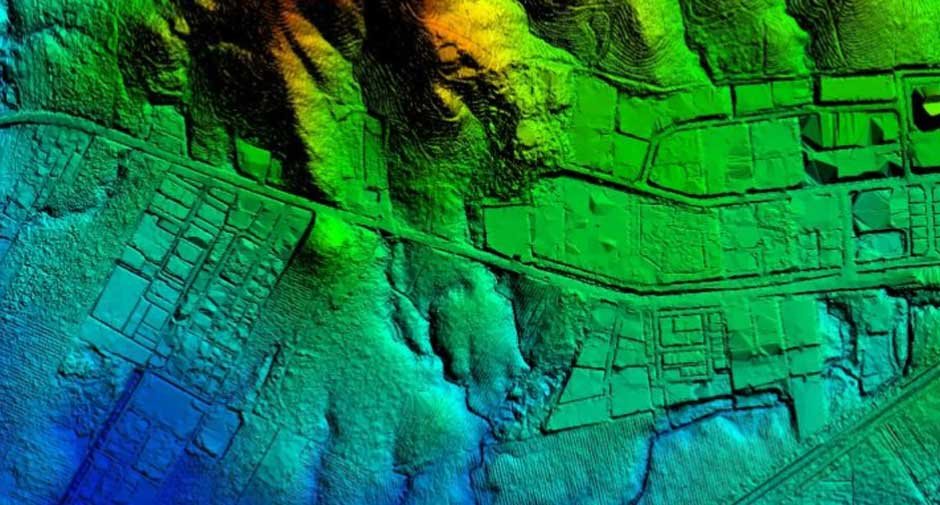
LiDAR technology has become a cornerstone of modern surveying, mapping and spatial analysis, offering unparalleled accuracy for everything from infrastructure planning to environmental monitoring. Whether you’re working in construction, asset management, forestry or urban development, understanding LiDAR point clouds—and how to interpret them—can dramatically enhance the precision and quality of your work. Many organisations partner with specialists like LiDAR Solutions to generate and process high-quality datasets that form the backbone of their spatial projects.
In this guide, we’ll take a comprehensive look at what LiDAR point clouds are, the formats they come in, the data they contain, and how professionals interpret them to create actionable insights.
What Is a LiDAR Point Cloud?
A LiDAR point cloud is a digital representation of real-world environments, generated by sending laser pulses toward surfaces and recording the time it takes for each pulse to return. Each recorded “point” contains precise spatial coordinates (X, Y, Z), giving users a detailed three-dimensional model of terrain, vegetation, buildings and other features.
Point clouds form the raw data from which ground models, contours, vegetation structures, volumetrics, digital twins and 3D asset models are derived.
Common LiDAR Point Cloud Formats
Different industries and software platforms rely on specific point cloud formats. These are the most widely used:
1. LAS (Log ASCII Standard)
The industry standard for airborne and terrestrial LiDAR data. Key benefits:
- Stores millions of points efficiently
- Contains rich metadata
- Retains classification, colour and intensity values
- Highly compatible with GIS and CAD platforms
2. LAZ (Compressed LAS)
A compressed version of LAS, offering reduced file sizes without loss of data. Best for:
- Large-scale projects
- Efficient storage and sharing
3. E57 (ASTM E57)
A flexible format commonly used for terrestrial laser scanning. Advantages:
- Supports multiple sensor sources
- Ideal for complex indoor or industrial scans
4. PLY (Polygon File Format)
A format often used in visualisation and detailed modelling workflows. Use cases:
- 3D modelling
- Computer graphics
- High-resolution mesh creation
5. XYZ / TXT / CSV
Simple text-based formats containing coordinates and sometimes intensity values. Good for:
- Quick inspections
- Importing into non-specialised software
- Lightweight analysis tasks
Key Features Found in LiDAR Point Clouds
LiDAR data is more than a simple collection of coordinates. Each point can store a variety of attributes that increase interpretability and accuracy.
1. Spatial Coordinates (X, Y, Z)
The foundation of all LiDAR data—representing the precise location of each point.
2. Intensity
Indicates how much laser energy returned to the sensor, helping identify:
- Material types
- Surface conditions
- Object boundaries
3. Classification Codes
Points can be classified according to their surface type, such as:
- Ground
- Vegetation (low, medium, high)
- Buildings
- Water
- Noise
Classification is essential for generating accurate terrain models and isolating specific features.
4. RGB Colour Values
When LiDAR is paired with imagery, each point can include colour data for enhanced visualisation.
5. Return Number & Number of Returns
Each laser pulse may return multiple echoes. For example:
- First returns capture canopy tops
- Last returns often identify the ground beneath vegetation
Analysts use these values to separate vegetation layers or identify submerged terrain.
6. GPS Time & Scan Angle
These attributes assist with:
- Flight path reconstruction
- Data quality assessment
- Error correction
How Professionals Interpret LiDAR Point Clouds
Interpreting LiDAR data is a specialised skill that blends spatial analysis, software expertise and domain knowledge. Here’s how experts typically approach the process:=
1. Data Cleaning and Filtering
Before analysis, point clouds are cleaned to remove noise or irrelevant data. This may include:
- Erroneous points
- Reflections from water or reflective materials
- Movement distortions (vehicles, birds, etc.)
Quality filtering ensures subsequent outputs are accurate and reliable.
2. Point Classification
Classifying data into meaningful groups enables targeted analysis. Modern software uses machine learning and AI algorithms to:
- Separate natural vs built features
- Identify vegetation layers
- Distinguish ground from elevated structures
Classification lays the groundwork for contouring, mesh generation and digital terrain modelling.
3. Generating Digital Terrain and Surface Models
From the cleaned data, analysts derive:
- DTMs (Digital Terrain Models) – bare-earth surfaces
- DSMs (Digital Surface Models) – include trees, buildings and structures
- CHMs (Canopy Height Models) – vegetation height calculated from DSM minus DTM
These models underpin planning, engineering, hydrology and ecological studies.
4. Feature Extraction
LiDAR enables automated detection of specific features, such as:
- Powerlines
- Road kerbs
- Roof outlines
- Tree canopies
- Ground breaks
This process speeds up surveying workflows and boosts consistency across projects.
5. 3D Modelling and Visualisation
Point clouds can be converted into:
- Meshes
- 3D solids
- Digital twins
- BIM-integrated models
These outputs support asset management, construction planning, virtual inspections and simulation environments.
6. Change Detection and Monitoring
Comparing point clouds captured at different times helps identify:
- Erosion
- Construction progress
- Vegetation growth
- Structural deformation
- Flood impacts
LiDAR’s high precision makes it ideal for ongoing monitoring programs.
Why LiDAR Point Clouds Matter
LiDAR point clouds are one of the most detailed and accurate spatial datasets available today. They power decision-making across:
- Engineering and infrastructure
- Environmental science
- Forestry
- Urban planning
- Mining
- Utilities
- Construction and design
With industries increasingly turning to data-rich 3D environments, LiDAR is no longer a specialty tool—it’s becoming standard practice.
Understanding LiDAR point clouds—their formats, attributes and interpretation methods—empowers professionals to make more informed decisions and unlock deeper insights from spatial data
Whether you’re analysing terrain, modelling infrastructure or monitoring environmental change, working with high-quality data and skilled processors makes all the difference. For organisations looking to improve accuracy and streamline spatial workflows, partnering with experts can help ensure your LiDAR datasets are tailored, precise and ready for real-world application.