
All over the world, rural crime has seen a dramatic rise. According to the NFU Mutual Rural Crime Report 2025, livestock theft has climbed nearly 30% in the UK. And in California, the Fresno County’s Agricultural Crime Task Force has reported over $30 million USD in losses due to agricultural theft.
The statistics highlight a significant challenge that rural property owners face – an isolation problem. Assets in remote locations are often difficult to secure and monitor properly, making them an easy target for criminals. In fact, majority of rural crimes go unreported due to the lack of confidence in outside authority to solve remote incidents, as well as insufficient evidence to incriminate anyone.
As such, suppressing dangers to your rural property typically comes down to two key ideas: being able to deter intruders and being able to catch them in the act.
Signs Are Surprisingly Effective
Sometimes all it takes to deter criminals is a little psychological push. Installing signage that simply says, “Do Not Enter”, “Private Property”, or “Cameras in Use” has shown to have a significant impact in deterring potential intruders from entering unattended property.
This suggests that even without proper surveillance, a simple psychological intervention can be enough to lower risks of theft. For such a cost-effective way to secure your assets, installing signs should be a no-brainer for any rural property owner.
Locking Up Your Property
A misconception about locks is that their utility comes from physically preventing theft. In reality, locks work because they make it inconvenient for thieves to break in, and most of the time, inconvenience is enough. A 1963 case study in West Germany found that making steering wheel locks mandatory produced a 60% decline in car thefts that has persisted to this day, with similar benefits later observed in the UK and US.
The logic behind this is straightforward: committing a crime becomes less appealing if it requires more effort – a practical application of the Rational Choice Theory.
For rural property owners, locking up your assets is a simple method to transform your property from an easy target to a hard bargain.
Catching Thieves with Security Cameras
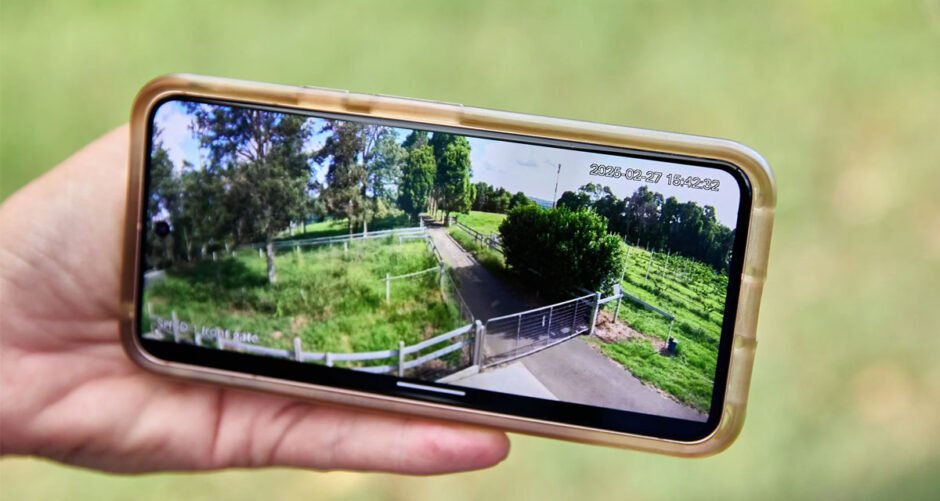
For rural properties, security cameras matter more than most people realize. Being isolated means there’s rarely any witnesses nearby and that makes it extremely difficult for owners to provide testimonies or evidence to authorities. A discreet security camera can close the gap entirely, monitoring your assets and identifying any unwanted visitors.
However, standard household security cameras aren’t built to withstand the harsh environment of the rural outback. Dust, rain, extreme heat, and long periods without maintenance can quickly degrade equipment designed for urban areas. Isolated areas also rarely have strong Wi-Fi connection, meaning that remotely connecting to a regular suburban camera might not be an option.
This is why retailers like Security Cameras For Farms focus specifically on cameras designed for rural usage. These cameras are designed to be waterproof and dust-tight to survive environmental degradation, equipped with solar-power to keep it running in the field for longer. They also feature 4G connectivity to allow for remote connectivity. Depending on your needs, you might consider a PTZ camera to monitor large areas, or a more portable, long-range camera to quietly alert you of intruders. More advanced cameras even incorporate AI to automatically track people.
Whichever system you choose, a security camera allows you to make a criminal think twice and gives you the evidence to act if they don’t.
Tracking Down Your Assets
Fewer than 25% of stolen equipment is ever recovered, according to the National Insurance Crime Bureau (NICB). If your assets are at risk of being stolen, it’s a good idea to fit them with GPS tracking devices to provide a historical location trail for recovery, as well as evidence for police reports and insurance claims.
The impact of GPS devices shouldn’t be underestimated. In the same report, the NICB highlighted that nearly 70% of stolen equipment were attached with tracking systems.
If you’re a rural property owner, a GPS won’t prevent a theft, but it creates an opportunity for asset recovery and evidence to back your claims.
It’s a sad fact that rural crimes are usually underrepresented. Property owners lack the convenience of nearby police, making them an easy picking for criminals. There is no single preventative measure for certain property protection, but there are steps you can take to mitigate the danger. By combining these strategies, you can close the gap from being an easy target to a hard bargain.