Every autumn, thousands of raptors leave European skies and head south. Their destination? The grasslands of East Africa, where they’ll spend the winter months hunting and resting before the long flight home.
Which Species Make the Journey?
Several European migratory raptors travel the East African Flyway to reach Kenya. The Steppe Eagle arrives from Central Asia and Eastern Europe, often appearing over the Masai Mara by late October. Montagu’s Harriers follow grasshopper populations across the Sahel, sometimes making it as far south as the Mara’s open plains. The European Honey Buzzard, despite its name, feeds mainly on wasp larvae — though in Africa it switches to termites and other insects.
Pallid Harriers also winter in Kenya. They’re not always easy to spot, but patient observers can find them quartering low over the short grass near Musiara Marsh.
When and Where to See Them
The peak window for Palearctic migrant birds in the Masai Mara runs from November through March. Early mornings work best — between 6 and 9 AM, when thermal activity is low and raptors perch more visibly. Late afternoons bring another opportunity as birds settle for the night.
The Masai Mara National Park hosts over 55 raptor species, mixing African residents with European visitors. Mara North Conservancy and the Mara Triangle both offer good sighting opportunities, though I’ve had better luck in areas with scattered acacia trees rather than pure open grassland.
Nairobi National Park deserves mention too. A Greater Spotted Eagle nicknamed “Blinky” — it has one eye — has returned to winter there for nearly eight consecutive years now. Guides know the bird by name.
Honest Challenges
Finding specific migrant raptors isn’t guaranteed. Unlike the resident Bateleurs and Fish Eagles that stick to predictable territories, migrants move with their food sources. A Montagu’s Harrier might hunt one area for days, then disappear entirely. Weather patterns, insect hatches, and grass height all influence where these birds concentrate.
I once spent two full mornings scanning for Pallid Harriers near the Talek River without success. On day three, four appeared simultaneously over a burnt patch — they’d been attracted by rodents fleeing the fire. Luck matters.
Practical Information
Park fees for the Masai Mara reserve currently run USD 200 per person for a 12-hour period (non-residents). Payment is handled through Ectizen. Nairobi National Park costs USD 80 per day.
Bring binoculars — 8×42 magnification works well for raptor identification. A spotting scope helps for distant perched birds, though it’s cumbersome in a moving vehicle.
For birders looking to witness these raptors in their winter habitat, specialized birdwatching safaris provide expert-led excursions into the Mara’s raptor hotspots. Resources like masaimarasafari.travel can help with planning.
Worth the Effort
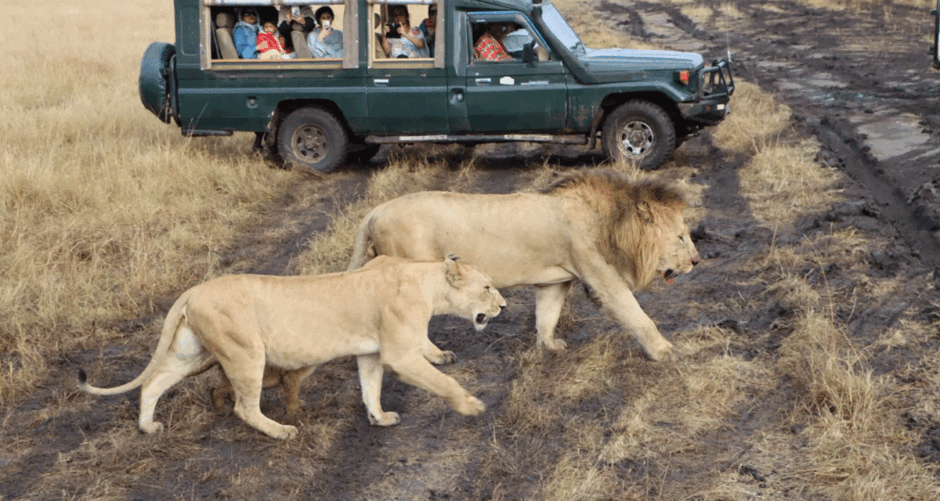
There’s something remarkable about watching a Steppe Eagle that nested somewhere in Kazakhstan now soaring over Kenyan savannah. The same bird, two continents. The Mara offers that connection — if you’re willing to look up from the lions occasionally.
Harrison Kamau, a TRA-licensed guide with over a decade in the field, put it simply: “Most visitors watch mammals. The serious ones watch everything.”
The raptors are there. November through March. The question is whether you’ll notice them.