
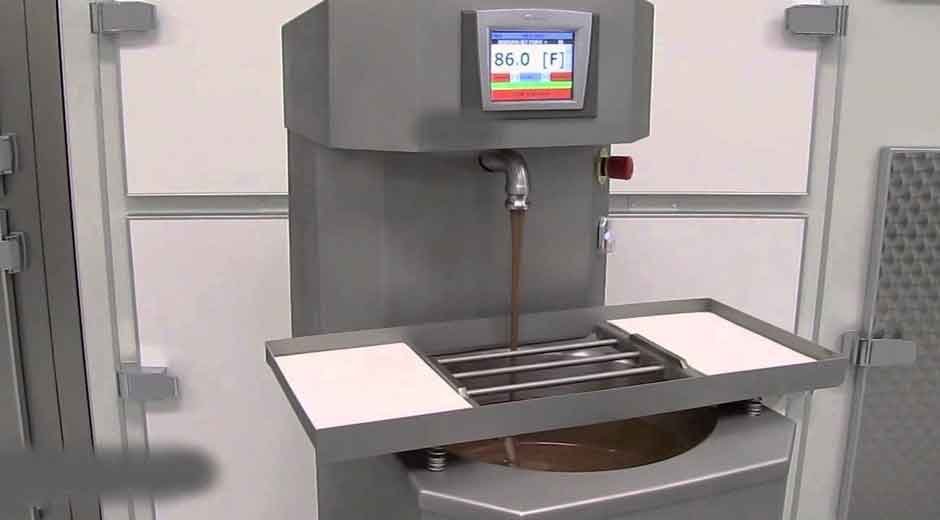
What does a chocolate tempering machine do? A chocolate tempering machine automates the precise heating, cooling, and reheating process that stabilizes cocoa butter crystals in chocolate, creating the proper crystalline structure necessary for professional results—glossy appearance, satisfying snap, smooth texture, and stable finish that doesn’t melt at room temperature or develop unsightly white streaks. While you can temper chocolate manually using traditional methods like seeding or tabling, chocolate tempering machines eliminate the guesswork, physical labor, and inconsistency that plague manual techniques, making professional-quality tempered chocolate accessible to anyone regardless of experience level. Understanding what these machines do and how they work helps you decide if investing in tempering equipment makes sense for your chocolate projects.
Understanding Chocolate Tempering Basics
Before exploring what chocolate tempering machines do, understanding the fundamental concept of tempering clarifies why these machines exist.
What is tempering? Tempering is the controlled crystallization process that stabilizes cocoa butter in chocolate by heating, cooling, and reheating it through specific temperature ranges. Cocoa butter can crystallize into six different forms, but only Form V crystals produce the desirable characteristics—shine, snap, smooth mouthfeel, and resistance to bloom.
What happens without proper tempering:
| Aspect | Properly Tempered Chocolate | Untempered Chocolate |
| Appearance | Glossy, uniform shine | Dull, streaky, mottled surface |
| Texture | Smooth, velvety mouthfeel | Grainy, waxy, rough texture |
| Snap | Crisp, clean break | Soft, bends rather than snaps |
| Stability | Stays solid at room temp (up to 72°F) | Melts easily, becomes sticky |
| Bloom Resistance | Resists bloom for months/years | Develops white streaks within days |
| Mold Release | Contracts properly, easy release | Sticks to molds, difficult removal |
The visual difference is immediately apparent. Tempered chocolate exhibits mirror-like shine and clean edges, while untempered chocolate looks dull with gray or white streaks. When broken, tempered chocolate snaps cleanly with a sharp sound, while untempered chocolate bends or crumbles.
How a Chocolate Tempering Machine Works
Chocolate tempering machines automate the precise temperature manipulation required to achieve proper cocoa butter crystallization.
The tempering process follows a specific temperature curve:
- Melting phase: Heat chocolate to 113-122°F (45-50°C) to completely melt all cocoa butter crystals
- Cooling phase: Lower temperature to 79-84°F (26-29°C) to encourage formation of stable beta crystals
- Working phase: Reheat slightly to 88-91°F (31-33°C) to melt unstable crystals while preserving stable ones
| Chocolate Type | Melting Temp | Cooling Temp | Working Temp |
| Dark (70%+ cacao) | 118-122°F (48-50°C) | 82-84°F (28-29°C) | 88-91°F (31-33°C) |
| Milk Chocolate | 113-115°F (45-46°C) | 79-81°F (26-27°C) | 84-87°F (29-31°C) |
| White Chocolate | 110-113°F (43-45°C) | 78-79°F (26-27°C) | 82-84°F (28-29°C) |
Step-by-step machine operation:
- Loading: Add chopped chocolate to the machine bowl (60-80% capacity)
- Program selection: Choose preset program for your chocolate type
- Melting phase: Machine heats with gentle stirring (8-12 minutes)
- Automatic cooling: Temperature drops while agitation continues (5-8 minutes)
- Reheating: Machine raises temperature to working range (3-5 minutes)
- Ready signal: Indicator shows chocolate is properly tempered
- Working phase: Machine maintains ideal temperature for hours
Temperature monitoring systems use thermocouples or thermistors for precise measurement, maintaining temperatures within ±0.5-1°C through microprocessor control. This precision ensures the chocolate experiences exactly the temperature profile needed for optimal crystal formation.
Key Functions of a Chocolate Tempering Machine
Chocolate tempering machines perform several essential functions that work together to produce properly tempered chocolate.
Precise Temperature Control
Temperature precision represents the most critical function. The narrow temperature windows required for proper tempering—often just 2-4°C ranges—demand accuracy impossible to achieve with casual methods. Quality machines maintain temperatures within ±0.5-1°C of setpoints.
The working temperature for dark chocolate (88-91°F) sits between the melting points of unstable Form IV crystals (81-82°F) and stable Form V crystals (93-97°F). A temperature error of just 3-4°C disrupts this balance, compromising the final result.
Automated Heating and Cooling Cycles
The automated temperature progression eliminates manual monitoring and adjustment throughout each tempering phase. Once you select the appropriate program, the machine automatically executes the entire temperature sequence, reducing hands-on time from 20-30 minutes to 2-3 minutes for setup.
Consistency between batches ensures every tempering session follows an identical temperature progression, producing uniform results regardless of operator experience or ambient conditions.
Continuous Agitation
Preventing hot spots requires constant gentle stirring that machines provide automatically. Without agitation, chocolate near heating elements becomes hotter than surface portions, creating temperature gradients that prevent uniform crystallization. Machine stirring mechanisms keep chocolate in motion, homogenizing temperature throughout the mass.
Maintaining Working Temperature
Once properly tempered, machines hold chocolate at ideal working temperature for extended periods. This function proves invaluable for complex projects spanning several hours—when making hundreds of chocolate-covered strawberries or filling intricate molds, the machine keeps chocolate ready throughout your entire session without retempting interruptions.
Benefits of Using a Chocolate Tempering Machine
Chocolate tempering machines provide numerous advantages that justify the investment for regular chocolate workers.
| Benefit | Manual Tempering | Machine Tempering | Impact |
| Success Rate | 60-80% (beginners) | 95-99% | Fewer failed batches, less waste |
| Time Per Batch | 20-30 minutes hands-on | 2-3 minutes setup | Hours saved weekly |
| Consistency | Variable, skill-dependent | Highly uniform | Professional appearance |
| Physical Effort | Significant stirring/tabling | Minimal | Less fatigue |
| Learning Curve | Steep—months to master | Minimal | Immediate professional results |
| Batch Capacity | Limited (1-2 lbs) | Scalable (1-30+ lbs) | Supports business growth |
Reduced waste significantly impacts economics. Every failed tempering attempt wastes expensive ingredients—a pound of quality couverture costs $15-30. Manual tempering may fail 30-50% of the time during the learning process, while machines achieve 95-99% success rates.
Professional results become accessible regardless of experience. The glossy finish, crisp snap, and stable properties match what expert chocolatiers produce manually after years of practice. This means home enthusiasts can create gifts indistinguishable from professional confections.
Time efficiency transforms chocolate work. For a chocolatier making 5 batches daily, machines save 90-150 minutes of hands-on time—nearly 2.5 hours of productive capacity freed for other tasks.
What Can You Make With Properly Tempered Chocolate?
Understanding what projects require tempered chocolate clarifies whether a machine makes sense for your work.
| Project Type | Requires Tempering? | Why |
| Molded Chocolates | Essential | Won’t release from molds without proper temper |
| Bonbons/Filled Chocolates | Essential | Shell must be stable, glossy, with proper snap |
| Chocolate Bars | Essential | Must resist bloom, stay solid at room temp |
| Truffles (coating) | Essential | Coating should be thin, glossy, stable |
| Chocolate Decorations | Essential | Must hold shape, maintain appearance |
| Chocolate-Dipped Treats | Highly Recommended | Better appearance, longer shelf life |
| Ganache | Not Required | Ganache doesn’t rely on crystal structure |
| Baking | Not Required | Chocolate melts during baking |
Molded chocolates absolutely demand proper tempering for contraction (easy mold release), glossy appearance, and stability. Untempered chocolate sticks in molds and looks dull. For anyone making molded chocolates regularly, a chocolate tempering machine is essentially non-optional equipment.
Chocolate decorations including curls, shards, and piped designs require tempered chocolate for stability. Decorations made from untempered chocolate bloom rapidly and lose their shape in warm conditions.
Chocolate Tempering Machine vs. Manual Methods
Comparing machine tempering to traditional techniques highlights advantages and limitations.
| Method | Cost | Time | Success Rate | Effort | Best For |
| Tempering Machine | $300-8,000+ | 5-10 min setup | 95-99% | Minimal | Regular users, businesses |
| Seeding Method | $15-30 | 15-20 min | 70-85% | Moderate | Occasional use, experienced |
| Tabling Method | $200-500 | 20-30 min | 90-95% | Very High | Traditional chocolatiers |
| Microwave | $15-30 | 10-15 min | 50-70% | Low | Emergency/casual only |
Seeding method: Melt 75% of chocolate, then add 25% as finely chopped seed. Stir as seed melts, cooling the batch while introducing stable crystals. Requires precise temperature control and practice to master.
Tabling method: Pour melted chocolate onto marble slab, work with spatulas to cool rapidly, then return to bowl with warm chocolate. Extremely physically demanding with steep learning curve.
When to use machines: Regular tempering needs (weekly+), business production, desire for consistent results, batches larger than 2-3 pounds, and when time efficiency matters.
When manual methods suffice: Occasional use (few times yearly), small batches under 1 pound, experienced users comfortable with technique, and budget constraints preventing equipment purchase.
Who Needs a Chocolate Tempering Machine?
Not everyone requires dedicated tempering equipment.
| User Type | Frequency | Recommendation | Investment |
| Professional Chocolatier | Daily | Essential | $2,000-8,000+ |
| Small Business | Weekly | Necessary | $800-2,500 |
| Serious Enthusiast | Monthly | Highly Beneficial | $500-1,500 |
| Casual Baker | Few times yearly | Probably Skip | Learn manual method |
Professional chocolatiers and businesses absolutely need reliable machines. Product consistency directly impacts business success, and manual tempering doesn’t scale to commercial volumes.
Serious home enthusiasts making tempered chocolate monthly benefit enormously from machines. Time savings and consistent results justify investment in entry-level equipment ($500-1,000).
Occasional bakers who rarely make tempering projects probably don’t need dedicated equipment. Manual methods suffice for small occasional batches when you accept the learning curve.
How to Choose the Right Chocolate Tempering Machine
Capacity considerations:
- 1-3 kg machines ($300-800): Home enthusiasts, small batches
- 3-5 kg machines ($800-1,800): Serious hobbyists, home businesses
- 6-10 kg machines ($1,500-3,500): Small commercial operations
- 10+ kg machines ($3,000-8,000+): Production facilities
Most users find value buying at the upper end of current needs to allow growth. The $800-2,000 range represents the sweet spot—reliable performance and adequate capacity without excessive cost.
Selection criteria checklist:
- Capacity matches typical batch sizes with 20-30% growth buffer
- Temperature control accuracy appropriate for quality standards
- Ease of use matches technical comfort level
- Removable, dishwasher-safe components for cleaning
- Reliable brand with good reviews and available support
- Adequate warranty (minimum 1 year, preferably 2+)
- Counter space fit for your workspace
- Budget alignment without financial strain
For expert guidance, explore chocolate tempering machines at Zucchero Canada, where knowledgeable staff help match your needs with appropriate equipment.
Conclusion
What does a chocolate tempering machine do? It automates the precise temperature control required to stabilize cocoa butter crystals in chocolate, producing glossy appearance, satisfying snap, and stable properties that define professional-quality tempered chocolate while eliminating the skill and inconsistency of manual methods. Through automated heating, cooling, and reheating cycles with continuous agitation, chocolate tempering machines make reliably perfect tempered chocolate accessible to anyone from beginning enthusiasts to professional chocolatiers. Whether you’re making occasional treats or producing hundreds of pieces daily, understanding what these machines do helps you decide if investing in tempering equipment makes sense for your journey. Ready to elevate your chocolate work from frustrating experiments to consistent professional results? Explore quality chocolate tempering machines at Zucchero Canada to find equipment that matches your needs, budget, and ambitions for creating exceptional chocolate.
References
Beckett, S. T. (2008). The Science of Chocolate (2nd ed.). Royal Society of Chemistry.
Greweling, P. (2012). Chocolates and Confections: Formula, Theory, and Technique for the Artisan Confectioner (2nd ed.). Wiley.
Talbot, G. (2009). Tempering. In S. T. Beckett (Ed.), Industrial Chocolate Manufacture and Use (4th ed., pp. 261-275). Wiley-Blackwell.
Wybauw, J. P. (2004). Fine Chocolates Great Experience: The Secrets of the Grand Masters. Lannoo Publishers.