30. July 2010
The 4th Carinthian Raptor Migration Camp in Austria starts on August, 19th. In it’s fourth year, this successful raptor camp is a fantastic opportunity to experience raptor migration, meat other raptor enthusiasts and experts and learn more about those amazing birds.
To learn more, see this website of Birdlife Austria:
http://www.birdlife.at/kaernten/raptorcamp/2010/index.html
If you can’t read the German website, go down to the bottom of the website on click on “Kontakt”. This is the contact email address for further questions.
23. July 2010
The BSPB has put satellite transmitters on 5 more Bulgarian Eastern Imperial Eagles. This is part of the EU fundet LIFE+ project “Save the raptors”.
Last year, 7 birds were fitted with transmitters. Satellite transmitters are a great way to learn about the mortality of eagles. From those seven birds, 2 are still alive today and in Bulgaria. The other 5 died because of electrocution, poisoning or were shot by a poacher. Without satellite transmitters, it would have been very hard to find this out.
Only when the reasons of death are known for the birds, can be something done against it. For example here the power lines where the birds died can be made safe or a campaign against poisoning can be started.
More information:
5 more juvenile Imperial Eagles were tagged with satellite transmitters
17. July 2010
In October 2010, the seventh conference “Populationsökologie von Greifvogel- und Eulenarten 2010″ (population ecology of raptor and owl species 2010) will be held in Halberstadt (Germany) from October, 21st – 24th.
This conference is held every four years. It will be full of interesting talks with many experts and raptor conservationists attending.
For more information (in German) see here:
http://www.greifvogelmonitoring.de/tagung_2010.html
7. July 2010
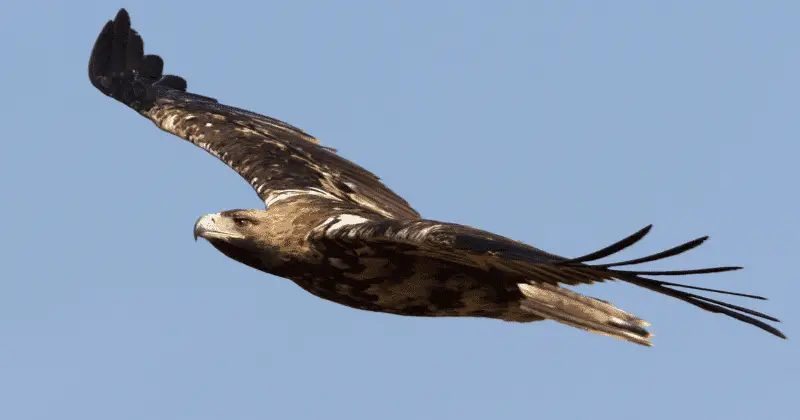
Golden Eagle
© Mike McGrady
I am happy to announce the first interview about Golden Eagles here on europeanraptors.org:
http://europeanraptors.org/interviews/interview_golden_eagle_great_britain_mike_mcgrady.html
The Golden Eagle is one of the largest and most spectacular raptors in Europe. In Great Britain lives a population of over 400 pairs. In this new interview, Mike McGrady, one of the leading experts on the Golden Eagle, talks about the current situation of this large raptor in Great Britain. Mike explains the current threats and what must be done to secure a future for Golden Eagles.
Mike also explains many interested details about the biology of the bird.
If you are interested in Golden Eagles, I highly recommend reading the interview.
23. June 2010
This year 23 young Eastern Imperial Eagles hatched in Bulgaria. There is hope for a few more chicks because of replacement clutches for some pairs.
According to the BSPB, for Bulgaria this means 1.4 chicks for a breeding pair in Bulgaria in 2010.
This year, only 16 pairs breed. In 2009 there were 18 pairs breeding. This may be due to an increased mortality in winter and early in the breeding season.
More information:
23 Imperial Eagles were hatched in Bulgaria
15. June 2010
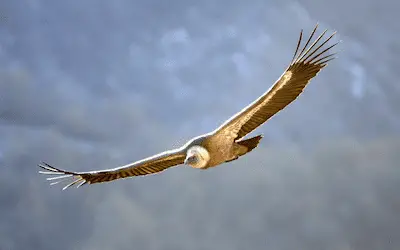
Here is the text of a press release by the Vulture Conservation Foundation (VCF) about the sending of 31 Griffon Vultures from Majorca to Bulgaria.
Jovan Andevski, BVAP project coordinator of the VCF and Ivelin Ivano, conservation director of the Bulgarian NGO Green Balkans collect two griffon vultures for the transport
31 griffon vultures wait for their transport
(Campanet, 14th of June) Today, after weeks of organisation and preparation, the Vulture Conservation Foundation (VCF) sent 31 griffon vultures from Majorca to Bulgaria. The official departure event was held at 10 a.m. in Mallorca at the Mediterranean Wildlife Conservation Centre, headquarter of the VCF. The vultures are transported by the partner organization from Bulgaria
“Green Balkans” in a Mercedes Sprinter (minibus) with a trailer. The route begins by boat from Palma de Mallorca to Barcelona, will continue by land transiting France, Italy, Slovenia, Croatia and from Serbia arriving to Bulgaria. The journey will take at least two days and two nights, passing around 3000 km of distance! The official arrival event in Bulgaria will take place in Stara Zagora at the Wildlife Rehabilitation and Breeding Centre – Stara Zagora (run by Green Balkans) on 17/06/2010 at 11 a.m. These birds are destined for release at four designated areas in Bulgaria comprise of the national park Central Balkan, nature reserves Vrachanski Balkan, Blue Rocks and Kotlenska Stara Planina Mountain.
The 31 vultures that are being provided by the VCF have come from the recovery centres of Extremadura, Castilla y León and the Zoo from Jerez due to the good collaboration between VCF and the local ministries of the Spanish autonomous communities.
This is the second shipment of vultures to Bulgaria after the first one of 18 individuals sent in March 2009. The vultures transported with the first transport are placed in the adaptation aviaries at sites where they adapt to local conditions before being released. The same destiny is awaiting the “new” vultures after there arrival in Bulgaria. The project foresees that within the next 5 years, about 150-200 griffon vultures will be released in Bulgaria.
This activity is within the framework of the LIFE+ project “Recovery of the Populations of Large European Vultures in Bulgaria”.
For successful implementation the project foresees activities that will reduce any risks or threats to their lives such as the major threat to this species, the illegal use of poison in the nature. Other activities include providing food on the artificial feeding sites, monitoring of the existing population and of the reintroduced one as well as protecting their habitat.
All this project activities are part of the long-term strategy of the Balkan Vulture Action Plan (BVAP) initiated in 2002 by the VCF. BVAP includes 8 countries and more then 30 local NGOs working on the implementation of the vulture conservation activities.
The main goal of the project is to restore the population of the griffon vultures in the Balkan range whose connectedness will link that population with colonies in Serbia and others in Western Europe. This way, we will create an undisturbed link between Europe, Africa and Asia.
The project is only possible due to the collaboration of the many local and international organisations involved as Vulture Conservation Foundation (VCF), Frankfurt Zoological Society (FZS) and Deutsche Bundesstiftung Umwelt (DBU). Local project partners and implementations of the project are: FWFF-Bulgaria, Green Balkans-Bulgaria, BPPB and BEPF.
For further information please check the www.balkanvultures.net
Download the press release as a PDF:
140610_VCF PressRelease_GriffonVulture Transport.pdf
Many thanks to Juan José Sánchez Artés for sending me the press release.
13. June 2010
A new interview is available, this time with Fulvio Genero about vultures in Italy.
Interview with Fulvio Genero about vultures in Italy
Fulvio talks about the current situation of Vultures in Italy, the historical development, reintroduction programs, threats to vultures. He also gives an outlook on the future of those great birds in Italy.
Fulvio has also written an article in the wonderful new book about European vultures:
New vulture book: Vultures, feeding stations and sanitary legislation: a conflict and its consequences from the perspective of conservation biology
12. June 2010
A 3,500 km cycling tour from Naardermeer Lake (the Netherlands) to the Sakar Mountain and the Black Sea coast has started to promote European nature conservation.
The tour was started on April 23rd, 2010 and was planned to finish on June 10th-11th.
The trip started in the Netherlands at the lake Naardermeer, which is one of the oldest nature reserves in the Netherlands and ends at the Sakar mountain range in south-eastern Bulgaria which is a stronghold for endangered species like the Saker Falcon and the Eastern Imperial Eagle.
The Bulgarian organisation Green Balkans, who runs many raptor and nature conservation projects in Bulgaria is a partner of this tour. Make sure to visit their website to learn more about raptor conservation in Bulgaria.
Also have a look at this interview:
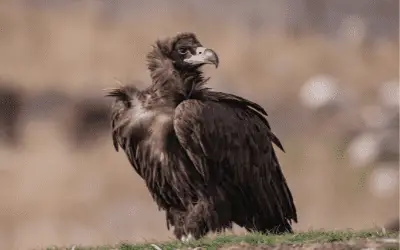
Interview with Simeon Marin from Green Balkans about the conservation of Eastern Imperial Eagles, Lesser Kestrels and Cinereous Vultures in Bulgaria.
More information about the cycling tour can be found here:
Cycling tour in protection of imperial eagle!
A cycling tour of some 3,500 kilometres to promote the conservation of extraordinary nature in Europe
31. May 2010
The Raptor Research Foundation (RRF) is a professional society for raptor researchers and conservationists worldwide. It’s goal is the accumulation and dissemination of scientific information about raptors.
I am happy to announce a new interview with Ruth Tingay about the RRF:
Interview with Ruth Tingay about the Raptor Research Foundation
In this interview, Ruth Tingay, currently president of RRF talks about the goals and the work of the RRF. She explains what the RRF does for raptor research, what work is done in Europe, how everyone can get involved with the RRF and what you can do to help the RRF.
If you are not already a member of the RRF I highly recommend becoming one. I’ve been a member for years and I am proud to be one. The RRF publishes the The Journal of Raptor Research which is one of the best journals about the biology and conservation of raptors and although written in a scientific style, the articles are normally easily readable for everyone interested in raptors.
Ruth also discusses here latest book called “The Eagle Watchers” which I highly recommend. See the interview for more information.
30. May 2010
SEO/Birdlife Spain has recently published the results from census of Golden Eagles, Egyptian Vultures, Osprey, Griffon Vultures and Peregrine Falcons in Spain in 2008.
To gather all those date, a huge effort by many people was needed. SEO publishes all the results in free e-books (in PDF format).
Click on the cover of each PDF to download it.
Golden Eagle
Osprey
Egyptian Vulture
Griffon Vulture
Peregrine Falcon
The reports are very detailed, for example the one on the Golden Eagle has 189 pages.
Other results from earlier censuses can be found here (incl. Bonelli’s Eagle, Cinereous Vulture, several harrier species, Eleonora’s Falcon and many other birds):
http://www.seo.org/programa_seccion_ficha.cfm?idPrograma=3&idArticulo=225
The new results are very interesting. For example, for the Golden Eagle, the census found 1,553 definite pairs and 216 likely pairs which gives a Spanish population of 1,769 pairs. This makes Spain very important for the conservation of the Golden Eagle in Europe.